
Drought across the region
It's April, so it's time to start discussing our current drought conditions


Over the next 2-7 days 2-4 " of rain is looking likely for a large part of the northeast. Bought over the 6-10 day The middle Atlantic and into southern New England Will likely see below average precipitation.
Looking at the US route monitor release today. We can see New England Eastern Pennsylvania Is experiencing moderate too severe drought conditions. There is even a small small area along the southwest coast of Maine that is seen extreme drought conditions. Other parts of the region are abnormally dry. Parts of New Jersey Are also seeing drought conditions slightly worsening. So the region needs all the rain we can get.
But due to all the recent rain it's not all gloom and doom. There are areas that are seen drought conditions improving.The
The current stats show that 1% of the Northeast is in extreme drought, 11% is in Severe drought, 22% is in moderate Drought and 25% is experiencing abnormally dry conditions.
The current El Nino Southern Oscillation Parameters
Sea surface temperature anomalies for January of 2026

Current Global SST anomaly.

We can see that la Nina is more or less dead
I'm still thinking that this summer is going to be at least a moderate east based El Nino. There are indications this could become a strong or even super El Nino.
I showed the different strengths of the phases of the ENSO in the past. But here is a graphic that shows the relative strengths of the various El Nino and la Nina classifications.

Graphic courtesy of the weather network
There's a lot of model data out there showing how quickly and strong 2026 El Nino is going to to develop. But how do we know the models are telling the truth? We Can look at physical data to determine that question.
Here's a look at the current wind data.
The latest 850 MB vector wind anomalies.

All that warm water That was pushed into the western pacific By the trade winds during the la Nina. The trade winds have reversed and are now west to east. That Orange area over the western pacific is showing westerly windburst The chart is indicating that this windburst Is very strong. This Is one of the major reasons that the El Nino is developing so quickly.

There is a lot of very warm subsurface water that is heading east towards the ENSO monitoring region. The above image is showing Extreme extreme extremely warm Water Between 300 to 600 hundred feet below the surface. Once this reaches the eastern Equatorial Pacific things are gonna change very quickly. As these temperatures rise up and abruptly change these neutral ENSO relatively cool conditions to a full fledged El Nino.
All of this is showing The very likely probability of a strong El nino event.
In other post, I showed how El Nino Influences the Atlantic hurricane season. So all I will say here, Is there El Nino typically brings average to below average tropical activity in the Atlantic basin. This is due to stronger trade winds injecting more wind shear. As well as conditions supporting more in the way of atmospheric stability over the Atlantic basin. What less active doesn't mean no impact. There have been El Ninos that ended up seeing above average activity. Take for example 2023. But we've also had below average seasons that still saw major hurricanes Strike the US. Examples of this are hurricane Andrew and hurricane Michael.
Possible fall and winter impacts.
Typically during El Nino There is cold air to the north And warm air to the south. Because of this, you see a strong storm storm track come off the Pacific into Southern California and the Southwest United States.
More times than not this southern storm track ends up cutting up over the Great Lakes. This track typically allows the warm southern air being drawn north to stay on the right side of the storm track keeping the East Coast warm.
This could drastically lower snowfall amounts for the season up here in the Northeast and Middle Atlantic
What else?
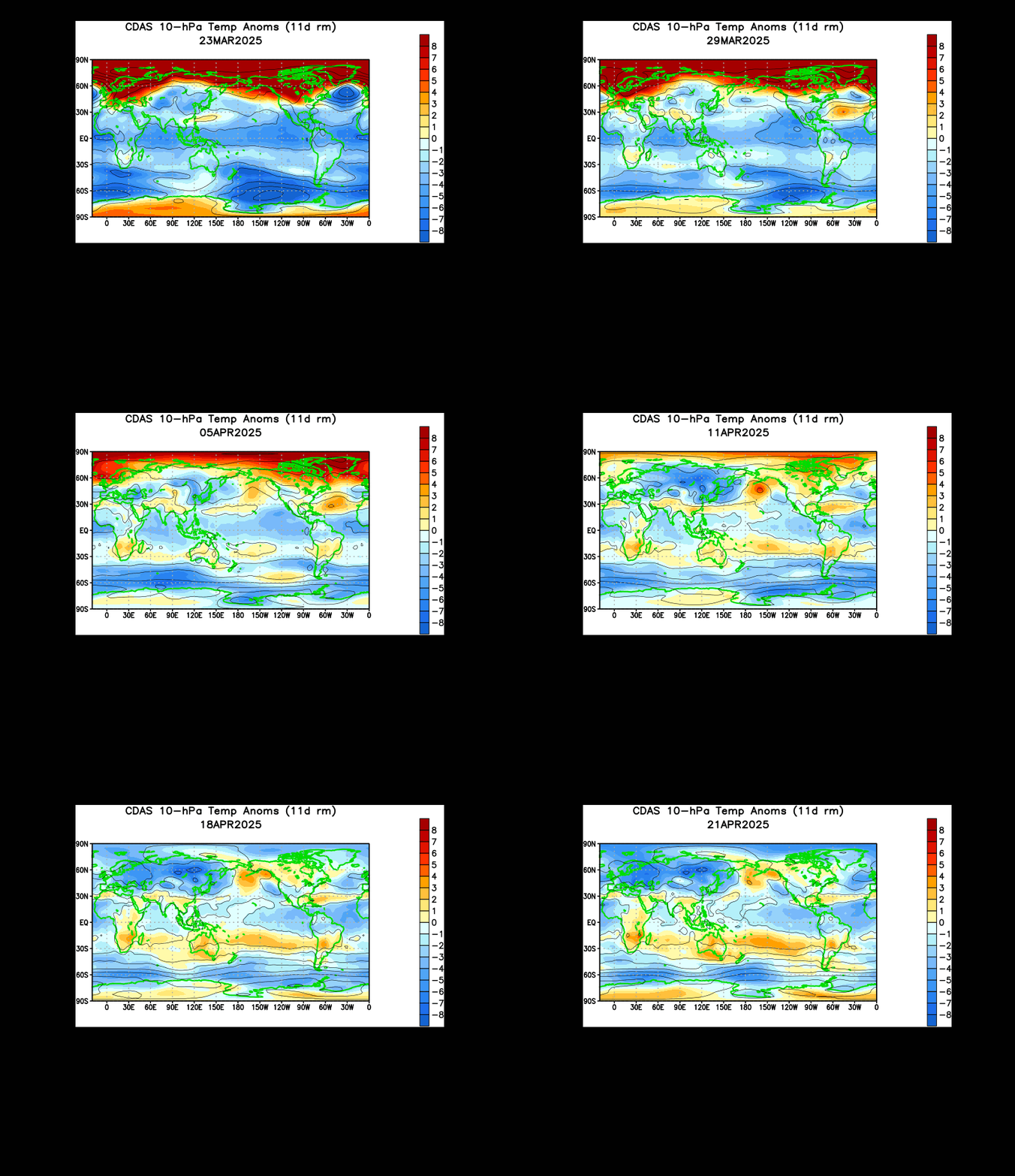
Sea surface temperatures alone are not enough. When it comes to long-term ENSO impacts. So we also have to look at that interaction with the atmosphere. The stratosphere has been in the jumble since 2022. During the spring of that year Tonga volcanic eruption occurred in the South Pacific. The eruption ejected a record amount of water vapor into the atmosphere. All of that moisture is still impacting the pattern And most likely will for the next several years. To know more about this eruption; go back to my post on the volcano in that year.
The volcanic event aloud the polar vortex to become disrupted quite a bit this past winter. The same atmospheric disruption, is also going to have at least some implications; for the El Nino and atmospheric interaction that's going to occur over the summer into the fall. Currently we see the atmospheric interaction with the developing El Nino lagging. With the global SST pattern the way it is; and the stratosphere behaving as it is. It's a Good indication that this years El Nino will be a different animal than we've seen in the past and could cause surprises that many people aren't anticipating.
So even if this develops into a strong or even super El Nino The atmosphere might tell a different story. Just something to keep in mind!
Here's a diagram that shows impacts of tropical forcing on convection. With an east based El Nino as the result.
Well that's it


Thank you. GP
ReplyDeleteYou're welcome
DeleteThank you
ReplyDeleteYou're very welcome
DeleteCould you remind me What 850 MB is in feet,I try to remember all the abbreviations and numbers in MB and put them too feet but can’t seem to do It.I think all my memory was used for Psychology,Freud himself took up a lot.The Kids and Grandkids are a jumble.When I try to remember these things now the information is thrown too the back.Believe me ,I wish I picked Meteorology for a Major when I picked a few beginner courses as electives.
ReplyDeleteDrought,our Driveway and lawn are still a Big puddle.The water table is right at the top and in many places above the top.The Snow is all melted but at around 1700ft. In the Hills it is still fairly deep in the woods.We went for a ride on the back roads at 2150 ft and the ponds are still frozen and snow is 2 feet deep,rivers are running high up there.Down in the Valley the rivers being much wider are somewhat high but not bad.They would. go up considerably if we had a prolonged warm spell with the 2-4 “ of rain and all the Snow up high melted quickly. Thank You Have a Great Day..
850 mb is roughly around 4700 - 5000 feet. 850MB is important because It's the top of the planetary bounty layer; so sits above all the friction near the surface. All these MB layers In the atmosphere are based on geo-potential height. So each of these like the 850 MB vary on any given day. These heights are based on the temperature of the air And they can move up or down depending on if the temperature is colder or warmer. It all has to do with convergence and divergence. But basically Heights are lower when you're under a trough with cooler air On the other side of the coin the heights are higher When you're under a ridge with warmer air. Well that's basically how it all works.
ReplyDeleteConditions are similar here With snow still melting in the higher elevations.